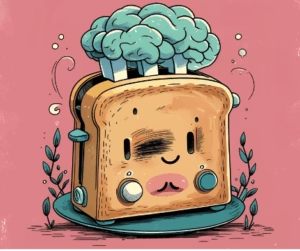
Ah, burnout. That crispy, smoldering state where your brain feels like an overused toaster and your body is held together by caffeine, vibes, and maybe a prayer. If you’ve ever stared blankly at your computer screen for 47 minutes, convinced you were “just about to start,” congratulations—you’ve met burnout.
But here’s the thing: burnout isn’t cured by just downloading another meditation app and hoping for the best. (Spoiler: breathing mindfully while working 80 hours a week is like putting a band-aid on a dragon bite.) Healing burnout—and preventing it in the first place—requires more than “inhale, exhale, repeat.” So let’s talk about the real stuff. The messy, sustainable, kind-to-your-soul stuff.

First, What Burnout Looks Like (a.k.a. The Warning Signs)
Burnout doesn’t show up one day in a trench coat yelling “Surprise!” It creeps in slowly, until you wake up one morning feeling like a human breadstick. Some red flags:
- Exhaustion that sleep doesn’t fix. (If naps feel like throwing a thimble of water on a house fire, that’s burnout energy.)
- Cynicism overload. You’re suddenly annoyed by everything, including the office ficus.
- Productivity nosedive. Tasks that used to take 15 minutes now take 3 hours and a breakdown.
- Forgetfulness. Walking into a room and forgetting why…every. single. time.
- Physical weirdness. Headaches, stomach issues, random aches. Stress loves a good body cameo.
- Checking out emotionally. You feel flat, detached, or like a robot set to “meh.”
If you see yourself here, hi. You’re not broken. You’re burned out. And that’s something you can actually work on.
1. Rest ≠ Netflix at Midnight
True rest doesn’t come from staying up until 2 a.m. watching four seasons of a show “ironically.” It means actual downtime. You get sleep that isn’t panic-induced. You take naps that don’t feel illegal. You have breaks where your phone isn’t suction-cupped to your hand. Rest is rebellion in a burnout world.
2. Boundaries: The Fences That Keep the Chaos Out
You don’t have to answer every email right away. You don’t have to attend every meeting that could have been an email. You don’t have to say “yes” to your boss, your cat, or your great-aunt Mildred. Boundaries are just tiny force fields that protect your energy. Build them, reinforce them, and don’t feel bad about locking the metaphorical gate.
3. Movement That Doesn’t Feel Like Punishment

Burnout bodies don’t need a new HIIT routine designed by Satan. They need movement that feels good. Stretch like a confused cat. Walk without destination. Dance in your kitchen like you’re auditioning for a deeply strange TikTok. Move to feel alive, not to earn a badge of honor.
4. Food: More Than Fuel (but Also, Actually Fuel)
Coffee and crackers are not a food group. Your brain literally needs nutrients to function—wild, I know. Eating real meals that include protein, veggies, and carbs that aren’t dust? That’s burnout prevention 101. Bonus: food is joy. If a warm bowl of pasta can reset your soul, that counts as therapy.
5. Connection: No, Not the Wi-Fi Kind
Isolation feeds burnout. You need people—your friends, your chosen family, your weird neighbor who always waves while mowing his lawn. Humans are wired for connection. Burnout shrinks your world; connection stretches it back open.
6. Honesty at Work (Yes, With Your Boss—If It’s Safe)
Here’s a radical thought: if you’re burned out, your boss should probably know. Productivity tanks when humans are crispy around the edges. And pushing harder when your brain is already fried? That’s not “dedication,” that’s a one-way ticket to professional disaster.
If you have a boss who won’t immediately use your honesty against you (and sadly, not everyone does), tell them what’s going on. “I’m overloaded, I’m burning out, and I need help prioritizing.” Sometimes, just naming the burnout out loud shifts the pressure. Your boss can’t fix what they don’t know about. They’d probably rather adjust your workload than watch you spiral into the abyss while clutching your fifth latte.
7. Joy as a Survival Strategy
You are allowed to do things just because they’re fun. Paint badly. Sing off-key. Collect tiny ceramic frogs (I do!). Joy isn’t frivolous; it’s medicine. If you want to feel human again, you need play.
8. Professional Help, Because Sometimes Self-Care Ain’t Enough
Therapy, coaching, medication, support groups—burnout recovery sometimes requires backup. And that’s not weakness. That’s strategy. Call in the reinforcements.
9. Burnout Doesn’t Mean You’re Weak (Read That Again)
Burnout doesn’t happen because you’re lazy, fragile, or “not cut out” for your job. It happens because you’re human. Humans have limits, even the resilient ones who juggle 87 tasks and still remember to water their succulents.
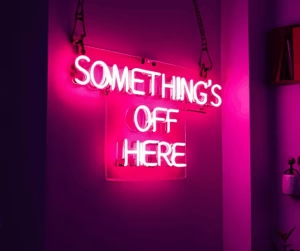
Experiencing burnout isn’t a personal failure—it’s a signal. Your body and brain are waving giant neon signs that say, “Hey, something’s off here.” That’s not weakness. That’s wisdom.
Resilience isn’t about pushing yourself until you collapse; it’s about noticing when you’re fried and choosing recovery instead of martyrdom. Sometimes, the bravest, most resilient move is to stop, rest, and rebuild.
Helpful Resources for Burnout
If this all feels too real, here are some places to explore:
- National Alliance on Mental Illness (NAMI) – resources, support, and help finding professional care.
- Mental Health America: Burnout Test & Resources – helpful screening tools and guides.
- Mayo Clinic: Job Burnout – signs, causes, and strategies.
- Crisis Text Line – text HOME to 741741 if you need support right now.
- 988 Suicide & Crisis Lifeline – available 24/7 in the U.S. (because burnout and mental health crises can overlap).
The Thriving-ish Truth
Burnout isn’t fixed by bubble baths or hustle culture pretending it’s self-care. It’s healed by reclaiming your humanity. Focus on sleep, food, and boundaries. Cultivate connection and honesty at work. Incorporate movement and joy. Seek professional support. Remind yourself that burnout does not equal failure.
You don’t have to come back from burnout as a “better, faster, shinier” version of yourself. You can just come back as a human who isn’t crispy. And honestly? That’s enough.
Because thriving-ish isn’t about perfection. It’s about surviving the meltdowns, laughing at the absurdity, and cobbling together a life that feels like yours again.
For guided journals that help to prevent and combat burnout, check out The Daily Calm Down and Permission to Pause.