
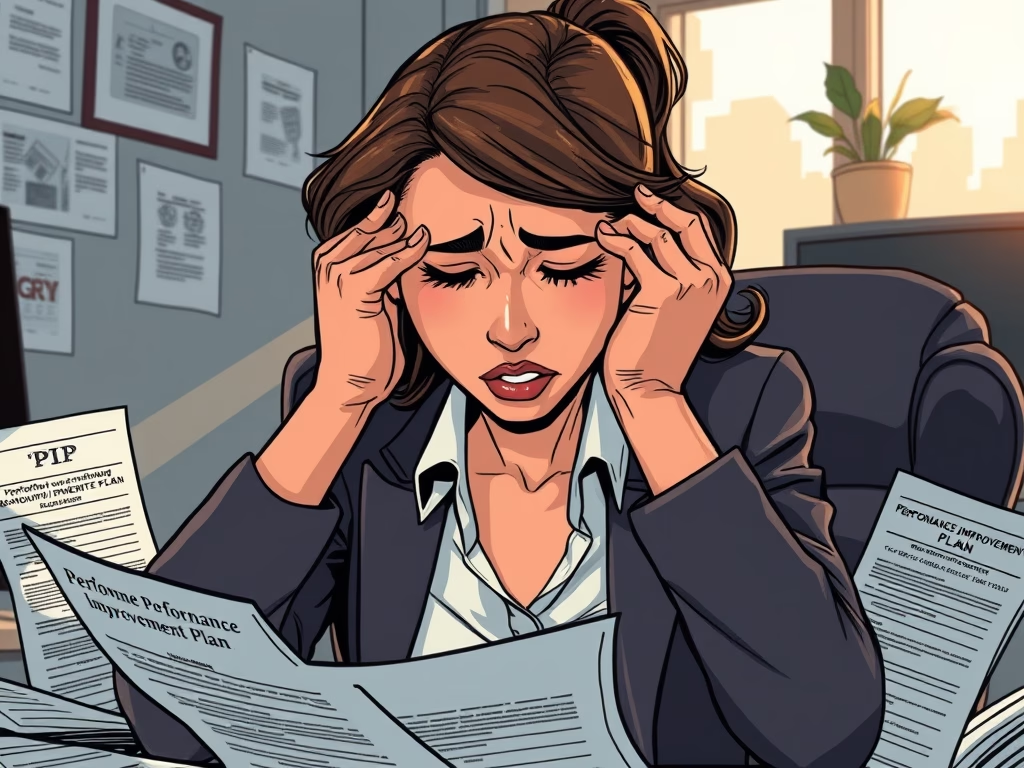
If you searched for “Performance Improvement Plan” (PIP) and landed here, first: welcome.
Second: yeah, you’re probably in trouble.
Let’s not sugarcoat it — being placed on a PIP is like being handed a corporate pink slip in slow motion. It’s HR’s version of saying:
💬 “We’re not mad. We’re just… deeply disappointed.”
But before you start rage-applying to 84 jobs and emotionally checking out on Slack, let’s talk about what a PIP really means — and what you can actually do about it.
🚨 What Is a PIP, Really?
A PIP (Performance Improvement Plan) is a fancy, HR-approved way of saying:
“We think you suck at your job, but we’re giving you a shot to unsuck in 30–90 days.”
It’s usually got:
- A list of alleged failures (with bullet points!)
- Vague action items like “be more collaborative”
- A deadline that’s more ominous than it sounds
Sometimes it’s an honest chance to improve. Other times? It’s just legal paperwork before the firing squad.
🚩 What It Actually Means
Let’s decode this real quick:
| Corporate Speak | Real Talk |
|---|---|
| “Alignment issues” | They don’t like how you work |
| “Needs improvement” | You’re skating on thin ice |
| “30-day performance plan” | Prove yourself, fast |
| “Continued employment is not guaranteed” | You’re on the bubble |
Also:
- Your manager is now on High Surveillance Mode™
- HR is watching like a cat with binoculars
- Everything you do from here on out counts
🧘 Step One: Don’t Panic (Yet)
Yes, it’s serious. No, it’s not always fatal.
Sometimes a PIP is genuinely designed to help. Other times, it’s a slow-motion corporate breakup. The trick is figuring out which one you’re in.
Either way, you need to get tactical.
📄 Step Two: Read the Damn Thing
Seriously. Print it. Highlight it. Frame it if you have to. Then dissect it like it’s a breakup text.
Questions to ask yourself:
- Are the expectations clear and measurable?
- Are the goals even achievable in the timeframe?
- Are they being vague on purpose?
✏️ Pro Tip: If you see words like “more proactive” or “increase ownership” — ask what that actually looks like.
📢 Step Three: Get Loud, Strategically
This is not the time to go silent and hope it blows over. (It won’t.)
Set up recurring check-ins. Send follow-up emails. Document every move you make. Your new motto:
“If it’s not in writing, it didn’t happen.”
Sample email lines:
- “Just circling back on progress toward this week’s metrics…”
- “Attaching documentation to support task completion…”
Look busy. Be busy. Let them see you trying.
🏃 Step Four: Plot Your Escape Plan
Even if you’re fully committed to turning things around — always have an exit strategy.
That means:
- Update your resume
- Polish your LinkedIn (yes, including that sad banner image)
- Start networking
- Apply to jobs that don’t require weekly humiliation
🎒Backpack packed = peace of mind.
🎯 Survival Tactics
Here’s your emergency checklist:
✅ Read the PIP thoroughly
✅ Ask clarifying questions (even the awkward ones)
✅ Break the goals into weekly tasks
✅ Set calendar reminders and deadlines
✅ Keep a “PIP receipts” folder
✅ Don’t vent to coworkers — vent to friends, therapists, or plants
✅ Quietly prep your Plan B
🧠 Mindset Shift: It’s Not You (Entirely)
Yes, you may have dropped some balls. Or maybe you’re just a bad fit for a bad boss in a bad system. Either way:
💡 A PIP is a moment, not a life sentence.
Don’t let it crush your confidence. Plenty of people get off a PIP and thrive — sometimes at the same company, sometimes at better ones.
And if you do get shown the door? You’ll leave with your head high, résumé tighter, and an excellent story for your next interview.
✌️ Final Pep Talk (with Bite)
You’re in a tough spot — no doubt. But you’re also not powerless. You can either:
- Rise like a phoenix (who reads bullet points), or
- Exit gracefully with a game plan, a severance check, and a spicy goodbye email draft you don’t send
Whatever you do, don’t internalize the shame. You’re still talented, capable, and funny as hell.
And hey — at least now you know how to spell “Performance Improvement Plan” in your sleep.